..
钱之道:
财富的光与影
The Way of Money: Light and Shadow
一、钱之本义
钱,本为器物,金石所铸,流通四方,以易百货。然其真义,不在铜铁之质,而在信义之心。
古人云:“钱财者,乃五家之共有。”钱之起,乃为人间互助,以通有无,以济急需。故钱之本义,非为积累,乃为流转;非为私欲,乃为公用。
一钱在手,可以温饱一人;十钱在手,可以济困一乡。若执于己,则生贪欲;若用于人,则化仁义。
钱之道,贵在明其本,守其正。钱若正用,则为光,照耀世间;钱若偏行,则为影,迷乱人心。正所谓“取之有道,用之有义”,方能使钱财成为天地间的清流,而非欲望中的泥沼。
I. The Original Meaning of Money
In the beginning of civilization, money was a tool — cast of metal, circulating across many lands to facilitate trade. But its true meaning lies not in the physical substance of gold or copper.
The true meaning of money resides in the heart: in trust and integrity.
The ancients said: “Wealth is shared by the all households in the village.”
Money first arose to facilitate mutual aid, to balance excess and want, to answer human need. The essence of money is found in movement and circulation; money is not intended for private hoarding or craving.
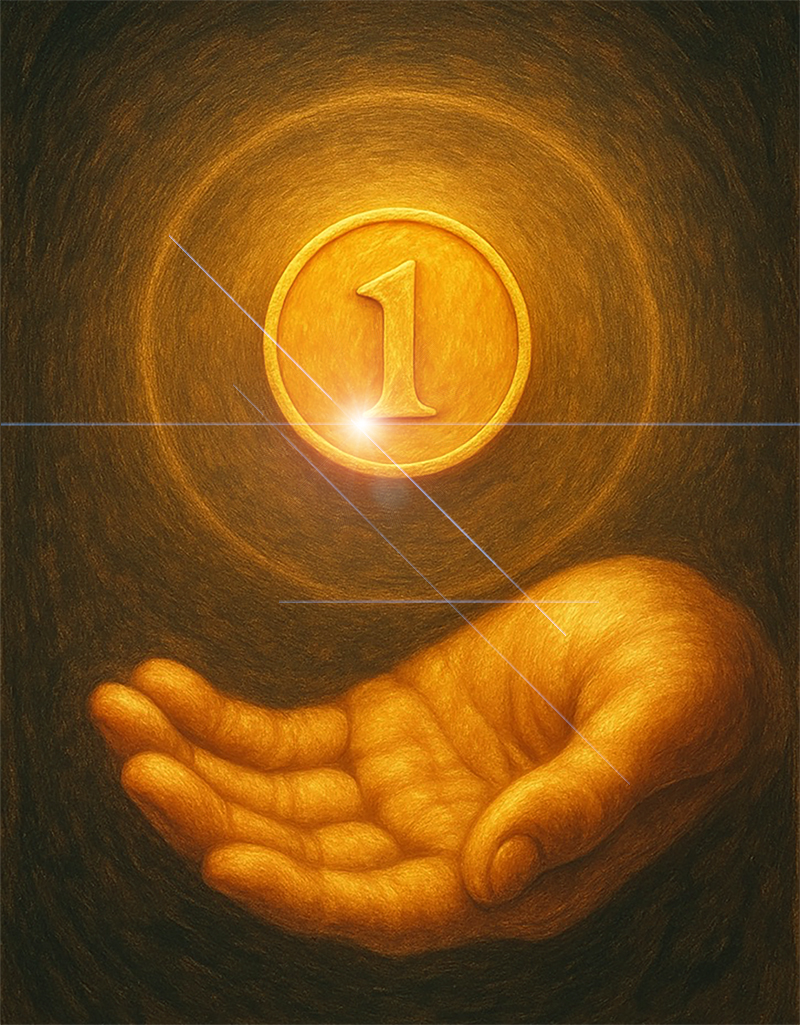
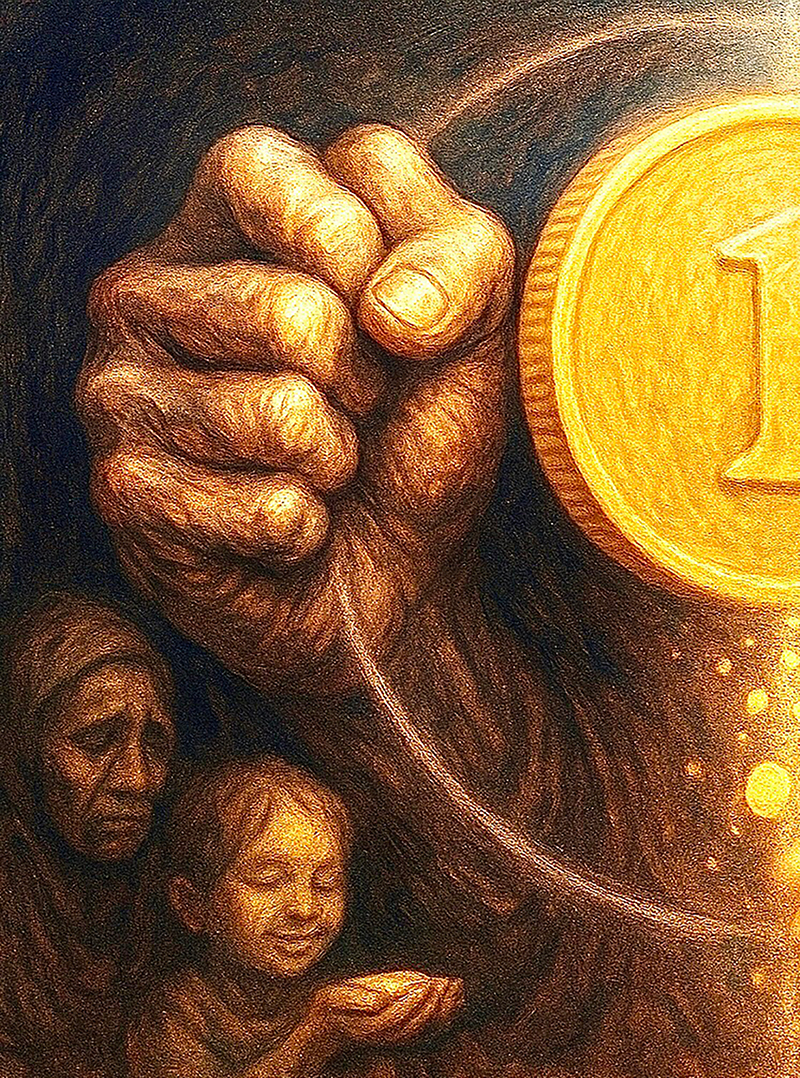
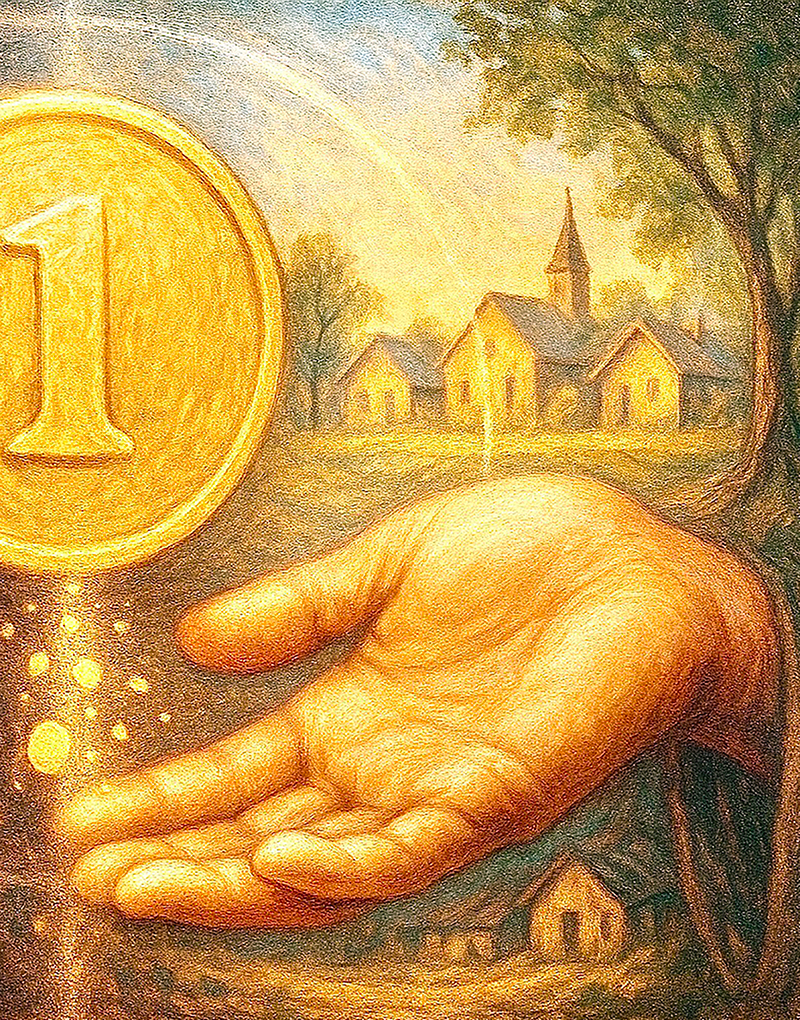
A single coin may feed the hungry; ten coins may bring relief to a village. Held in selfish grasp, a coin can produce greed; shared with others, the same coin becomes benevolence.
The Way of Money lies in understanding the origin of money and guarding its true value.
When rightly used, money is light, illuminating the world; when misused, it becomes shadow, confounding the heart.
Tao te Ching says, “To gain wealth in the Tao, spend it with righteousness.”
Let money flow as a clear stream through the world, rather than sinking people in mire and desire.
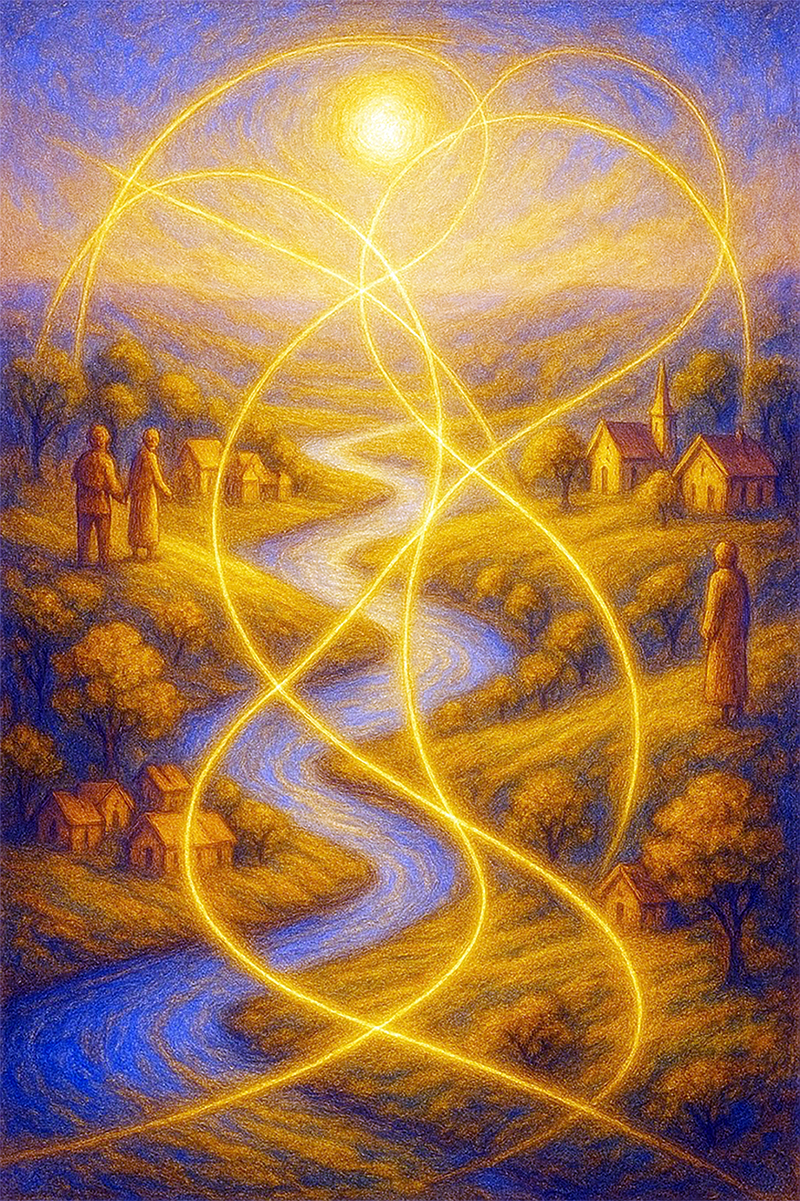
二、钱与人心
钱,最能照见人心。心若清明,钱则化为善行;心若迷惑,钱则成就贪欲。
古人云:“君子爱财,取之有道,用之有义。”钱的价值,不在多少,而在心之所向。得之以正,则安然;失之以义,则无憾。
钱之于人,如水之于舟。顺流而行,可以济世;若心不正,反覆之间,足以覆舟。故而,钱财既是助力,也是考验。它能让人心显其宽厚,也能让人心露其狭隘。
当人以钱养德,则钱成福祉;当人以钱逐欲,则钱化祸端。心若无私,钱如清风润物;心若执著,钱如烈火焚身。
钱与人心,原是一体。心若明,钱是光;心若昏,钱成影。唯有以道御心,以义导用,钱才能成为天地之间的清流,流向安宁与长久。
II. Money and the Human Heart
Money is the mirror of the heart. If the heart is clear, having money is an act of goodness; if the heart is clouded, having money is the seed of greed.
The ancients said: “A gentleman loves wealth, yet acquires it with the Tao and spends it with righteousness.” The value of money lies not in its amount, but in the direction of the heart. Gained with integrity, it brings peace; lost with honor, it leaves no regret.
Money is like water to a boat. With the current, it carries one safely across; with a misguided heart, the boat overturns in an instant. Thus money is both support and test—it reveals the heart’s generosity or exposes its narrowness.
When wealth nourishes virtue, it is a blessing; when wealth feeds desire, it turns to calamity. With a selfless heart, money is like the gentle wind that nourishes all things; with a grasping heart, it is like fire that consumes.
Money and the heart are one. With clarity, money shines as light; with delusion, it falls into shadow. Only by ruling the heart with the Tao, and guiding wealth with righteousness, can money flow as a clear stream, bringing peace and endurance.
三、钱之流转
钱,本为流转之物。其性如水,遇方则方,遇圆则圆,随势而行,不可拘滞。
在天地之间,钱的流转,正如江河之奔腾。若聚而不散,便成淤塞;若散而无序,便成荒漠。唯有导之以道,循之以义,才能既滋养生民,又润泽万物。
古人云:“财自道来,道厚财丰。”钱财若由正道而来,则如泉源清澈,流之不竭;若由邪径而取,则似浊流翻涌,虽一时丰盈,却必有枯竭。
钱之流转,在于其能通达。钱若只为己,便如死水,不得久长;钱若兼济人群,便如长河,愈流愈广。故善用财富者,不以积聚为荣,而以施予为乐;不以囤藏为富,而以流转为丰。
钱流则世安,财通则人和。其流若顺于大义,便可载舟济世,惠泽后人;若逆于正道,便成覆舟之险,遗祸无穷。
钱之流转,正是天地间的智慧:流而不滞,聚散有度,盈虚相生,化财为道。
III. The Flow of Money
Money is, by nature, a thing of movement. Like water, it takes the shape of what it meets—square when confined, round when freed—flowing according to circumstance, never to stagnant.
Within Heaven and Earth, the flow of money is like the surge of rivers.
If money gathers without release, it clogs; scattering without order, it becomes wasteland. Only when guided by the Tao and aligned with righteousness can it nourish the people and enrich the world.
The ancients said: “Wealth arises from the Tao; where the Tao is deep, wealth is abundant.”
When money comes through the right path, it is like a clear spring, inexhaustible; when it is taken by corrupt means, it is like a muddy torrent — appearing abundant for a moment, yet destined to dry.
The flow of money lies in its ability to circulate. If wealth serves only the self, it is stagnant water and cannot endure; if it uplifts the many, it is a great river, growing broader as it flows.
Thus, the wise take no pride in hoarding but find joy in giving; they do not count the value of wealth in storage, but in release.
When money flows, society finds peace; when wealth circulates, people live in harmony. If its course follows righteousness, it carries boats and saves lives, blessing generations; if it goes tries to go against the Way, it overturns boats and brings calamity.
The flow of money is the wisdom of the cosmos itself: to move without stagnation, to gather and disperse in measure, to let fullness and emptiness give rise to one another — transforming wealth into Heaven.
四、总理的钱之道与国家建设的伟大实践
周恩来总理的钱之道,深嵌于新中国从贫弱崛起到迈向现代化强国的伟大历程。他所践行的,并非抽象教条,而是节俭、合理分配、克制私欲、反对浪费的国家战略,为后人树立光辉典范。
新中国初立,财政一片空白。百废待兴之时,周恩来亲自过问国家预算的每一笔收支。他提出“开源节流”,要求所有支出用在刀刃上。1950年,他主持全国财政经济会议,号召干部带头减薪,自己更是以身作则,始终保持艰苦朴素。他说:“物质生活方面,我们领导干部应该知足常乐。人家分给我们的多了,就应该居之不安。”这不仅是一句劝诫,更是他一生的践行。
在财政调度上,他深知钱财是国家的筋骨。抗美援朝时期,外汇储备极度紧张,他指示“节用以养兵,精打以维国”,在战争与建设之间保持平衡。在国家建设阶段,他又强调:“舍得花钱培养人才,舍得花钱搞科学研究。”即便财政拮据,他仍坚持保障教育与科研开支。他主持制定《科学技术十二年远景规划》,力排阻力,推动清华、北大扩展理工学科,支持中国科学院攻关原子能、导弹、卫星等领域。这些投入,后来成为中国现代化的基石。
他的钱之道,更是公私分明,清廉如水。延安窑洞的日子,他与战士同甘共苦;执政中南海,他拒绝特供。直至生命最后,他仍拒绝昂贵治疗,把钱之道化为人之道,把有限的资源交还人民。
他的钱之道,不仅关注当下收支,更放眼民族自立的未来。他提出“四个现代化”,要求农业、工业、国防、科学技术齐头并进。他把财政看作民族复兴的根基,强调节俭、合理分配、杜绝奢华与浪费。在短短几十年间,他以有限资源托举起一个大国的雏形,让中国由积贫积弱走向独立自强。
周恩来的钱之道,凝聚成四个字:节俭、分配、无私、远见。他让钱财脱离贪欲的枷锁,成为民族的力量;让财政超越数字的计算,成为历史的脊梁。他的钱之道,是治国理政的智慧,更是滋养后世的精神丰碑。
IV. Premier Zhou’s Way of Money and His Historic Contributions
Premier Zhou Enlai’s way of using money was deeply embedded in the great journey of New China’s rise — from poverty and weakness to the path of modernization.
What he practiced was much greater than any abstract economic doctrine; it was a national strategy grounded in frugality, fair distribution, restraint of personal desire, and opposition to extravagance and waste. He set a luminous example for generations to come.
At the founding of the People’s Republic, the treasury was bare. Amid the urgency of national reconstruction, Zhou personally reviewed every item of the budget. He called for “expanding revenue and reducing expenditure,” insisting that every penny be spent where it was most needed.
In 1950, at the National Finance and Economic Conference, he urged groups of workers to cut their own salaries, while he himself lived simply, never abandoning austerity.
He declared: “In working life, we should be content and joyful. If others offer to give us more, we should feel uneasy.” This was more than ethical counsel; it was the rule of his life.
In fiscal management, Zhou saw money as the very sinew of the nation. During the Korean War, when foreign monetary reserves were perilously low, he ordered: “Use sparingly to sustain the army, economize to strengthen the nation,” striking a balance between war and construction.
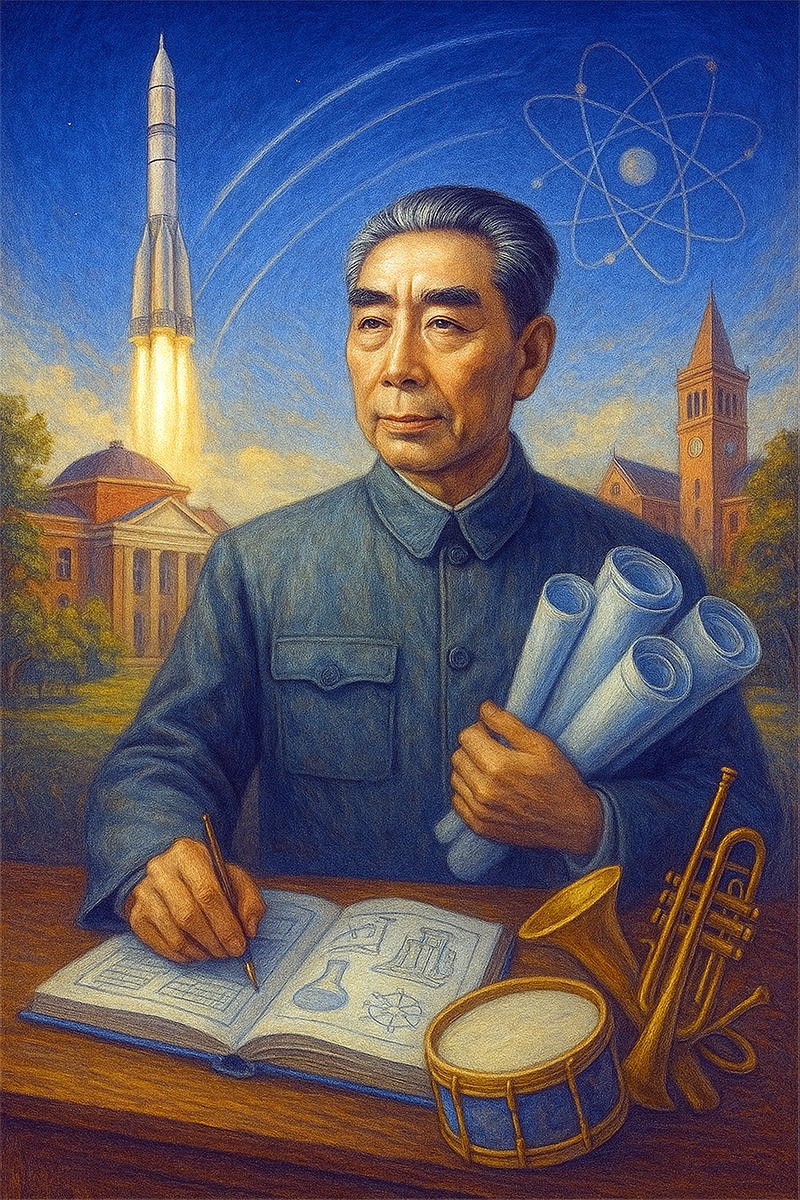
In peacetime, he stressed: “We must be willing to spend on cultivating talent, and on scientific research.” Even under fiscal strain, he protected education and research budgets. He personally oversaw the drafting of the “Twelve-Year Plan for Science and Technology,” overcame resistance, expanded science and engineering programs at Tsinghua and Peking University, and supported the Chinese Academy of Sciences in developing nuclear energy, missiles, and satellites. These investments became the cornerstones of modernization.
His way of money was marked by absolute integrity and public spirit. In the Caves at Yan’an, he shared porridge with the soldiers; in West Flower Hall, he declined privilege. Even in his final illness, he refused costly treatments, turning money into humanity, returning scarce resources to the people.
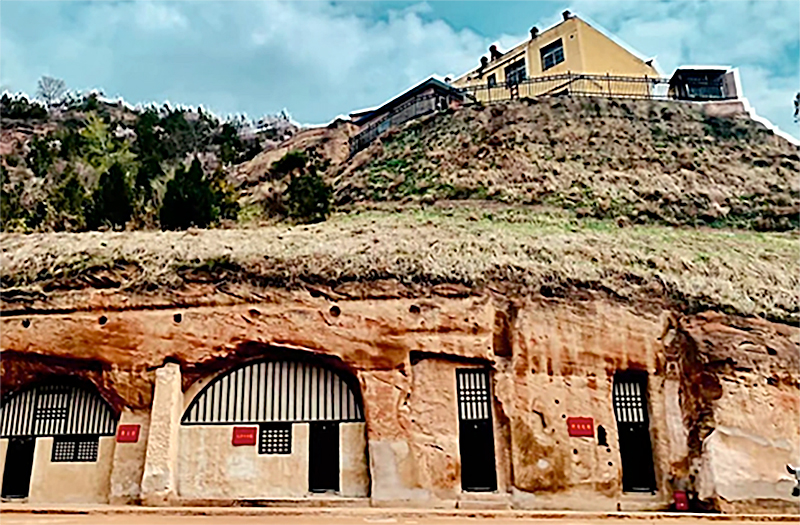
The caves at Yan’an | 延安的洞穴
Zhou’s financial vision extended beyond immediate balance sheets to the nation’s self-reliant future. He launched the Four Modernizations—agriculture, industry, defense, and science—as the comprehensive path to national strength.
To him, the Treasury was the foundation of revival. He emphasized frugality, rational allocation, and rejection of luxury or waste. In just a few decades, with the scarcest of means, he built up the framework of a great nation, raising China from poverty to independence and strength.
Premier Zhou’s way of money may be summed in four words: frugality, distribution, selflessness, vision. He freed wealth from the chains of greed and made it the strength of a nation; he lifted finance beyond the calculation of numbers and made it the backbone of history.
His way of money was not only wisdom in governance, but a spiritual monument to guide future generations.
五、钱与大道
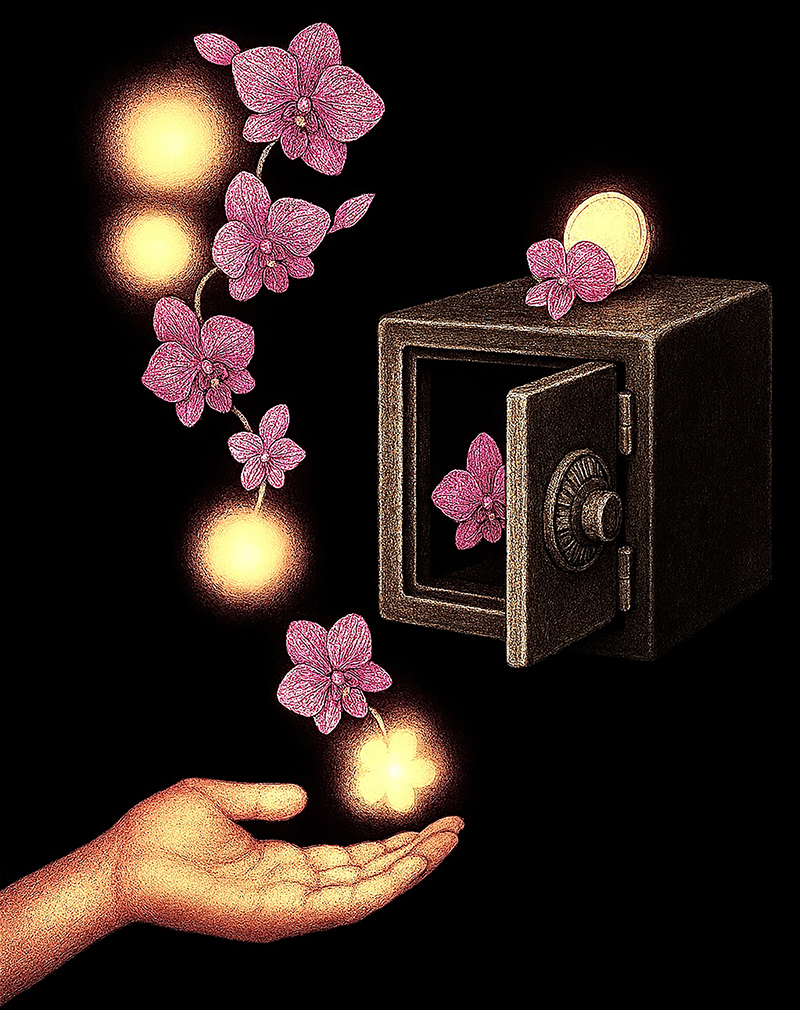
钱,是人间的器用,亦是大道的镜鉴。它映照人心之欲,亦考验人心之度。若人以钱为累,便沉溺于得失之间;若人以钱为器,则能化财富为光明,惠及世人。
钱之光,在于创造价值,滋养生命;钱之影,在于滋生贪婪,蒙蔽心智。大道之中,光影相随,唯有心怀正道,方能使财富趋于光明,远离阴翳。
古人有言:“取之有道,用之有度,散之有义。” 钱若合道,便能流转不息,如水泽物,润而不争。钱若偏离,便如烈焰,灼而伤人。大道引导财富,使其成为安民立国、济世利人的泉源。
钱之道,最终归于心之道。心若知足,钱便是助力;心若贪执,钱便成桎梏。唯有胸怀广大、视野长远,才能使财富与天地同流,与大道共荣。
V. Wealth and the Great Way
Money is a tool of the human world, and it is also a mirror of the Great Way. It reflects the desires of the heart and tests the measure of the soul. If one treats money as a burden, one sinks into calculation of gain and loss; if one treats money as an instrument, it becomes a light that benefits the world.
The light of wealth lies in creating value and nourishing life; its shadow lies in breeding greed and clouding the mind. Within the Tao, light and shadow walk together; only with a heart aligned to the Way can wealth incline toward brightness and turn away from darkness.
The ancients said:
“Gain wealth with the Way, spend it with measure, disperse it with righteousness.”
When money follows the Tao, it circulates endlessly, like water nourishing all things, moistening without contention. When wealth strays, it can burn like fire, scorching and destroying. Guided by the Tao, wealth becomes the source of stability for nations, and the foundation of well-being for humankind.
The Way of Money ultimately returns to the Way of the Heart.
When the heart knows contentment, wealth becomes strength; when the heart clings to greed, wealth becomes bondage. Only with broad vision and open heart can wealth flow with Heaven and Earth, sharing in the harmony of the Great Way.