特别篇
国际和平日
9.21.
周晓芳 Zhou Xiaofang
2025年09月21日 09:49
Special Edition:
International Day of Peace
September 21
Xiaofang Zhou North
September 21, 2025
with editing and graphics
by Michael North
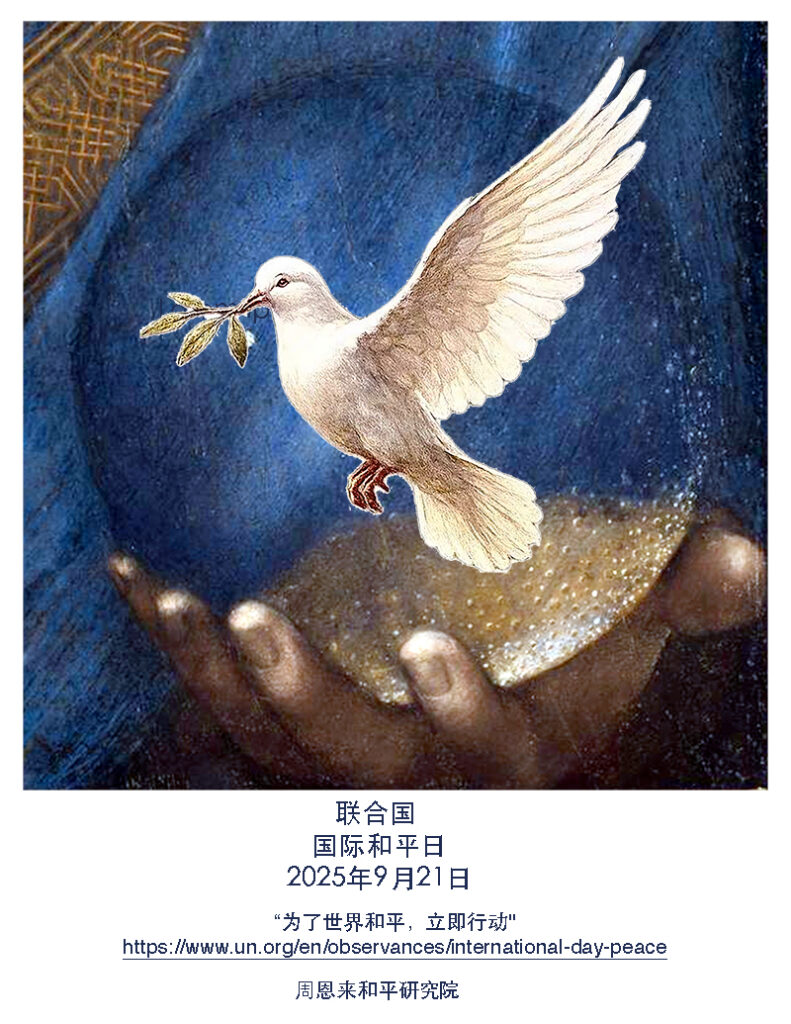
今天是 2025 年 9 月 21 日,联合国国际和平日(International Day of Peace)。今年的主题是 “为了世界和平,立即行动”(Act Now for a Peaceful World),这是对全人类的呼吁:和平不仅是理想,更需要每一个人立刻以实际行动去守护、去建设。
国际和平日源自 1981 年联合国大会的决议。最初,它设立的目的是为加强各国和各民族之间和平的理念与合作。到了 2001 年,联合国进一步通过决议,把这一天确立为**“全球停火与非暴力日”**。这意味着,在这一天里,世界应当停止冲突,倡导非暴力,并以教育、文化、善意和理解来取代仇恨、敌意与对抗。它提醒着人们:和平不是短暂的停战,而是人类文明长期的选择,是一条需要坚持不懈走下去的道路。
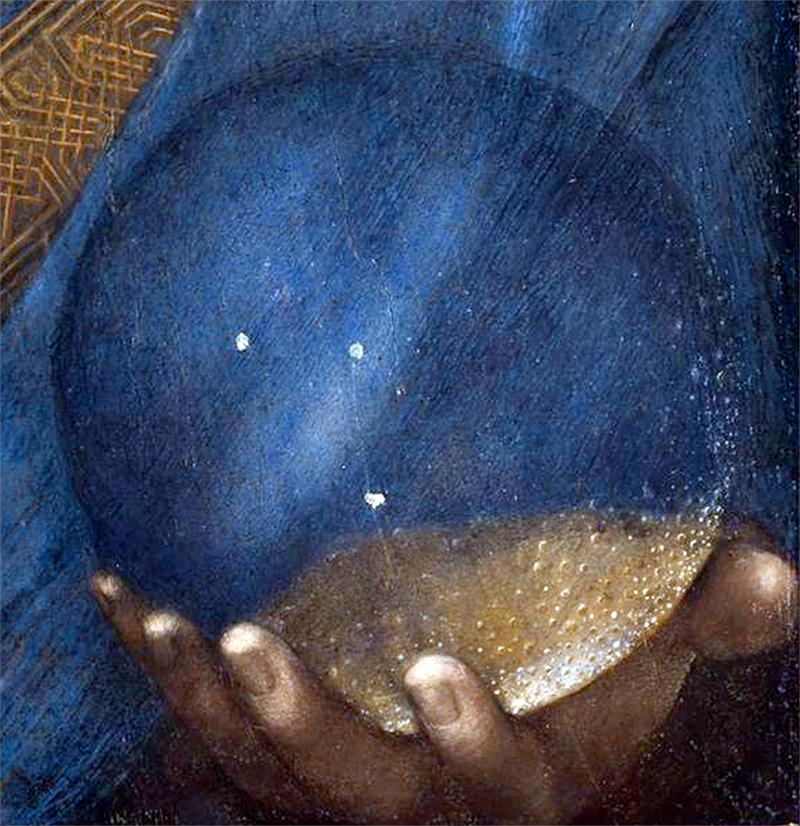
September 21, 2025 is United Nations International Day of Peace. This year’s theme is “Act Now for a Peaceful World”, a call for humanity to change peace from an aspiration into immediate action.
The International Day of Peace was established by UN General Assembly resolution in 1981; it was intended to strengthen the ideal of peace among nations and peoples. In 2001, the Assembly also designated this day as a global day of ceasefire and non-violence.
We are reminded that peace is the continuous practice of coexistence and civilization; it is deeper than the end of war.
中国历史悠久,文化底蕴深厚。周恩来总理在 1953 年底提出“和平共处五项原则”:互相尊重主权和领土完整、互不侵犯、互不干涉内政、平等互利、和平共处。这五项原则后来在 1954 年中印、中缅联合声明中正式写入,并逐渐成为联合国和国际社会广泛认可的重要准则。它超越了意识形态和制度差异,为冷战时期的国际秩序注入了一种全新的可能性:和平并非权宜,而是正义的选择;共处不是妥协,而是共同进步的前提。
纵观世界历史,东西方文明都在各自的历程中不断探索着和平的可能性。古希腊哲人柏拉图谈到正义与和谐,认为公正的秩序才是社会长治久安的保障;古代中国的“和而不同”思想则强调差异中的共存,承认多样性并以和谐为目标。进入近现代,许多国家通过教育、法治和文化交流来推动和平。例如,欧洲在二战之后建立了欧盟,正是希望通过经济与政治一体化来防止新的战争;南非在种族隔离结束后,通过“真相与和解委员会”,以公开与宽恕化解长期的对立与仇恨;卢旺达在内战之后,也努力通过教育和社会建设来重建民族团结。
China has long been an advocate for peace. As early as 1953, Premier Zhou Enlai introduced the Five Principles of Peaceful Coexistence: mutual respect for sovereignty and territorial integrity, non-aggression, non-interference in internal affairs, equality and mutual benefit, and peaceful coexistence.
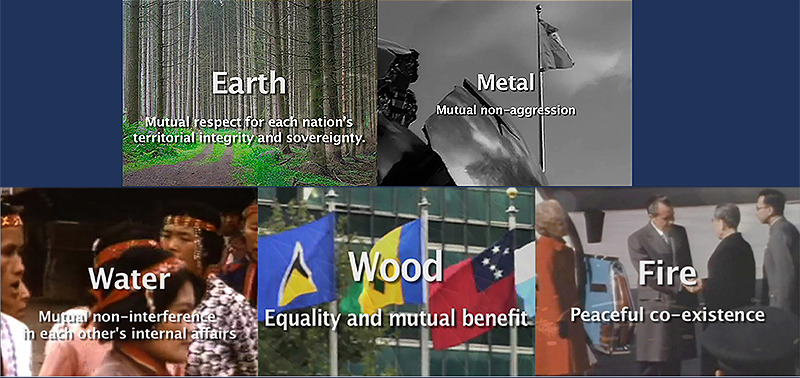
These principles were enacted in joint statements with India and Burma in 1954 and soon became widely recognized as guiding norms in international relations. They transcend ideological divides, offering a vision of peace based on justice, greater than expediency. Coexistence is the foundation of shared progress, and completes the promise of compromise.
Throughout history, both Eastern and Western civilizations sought paths toward peace. Plato envisioned justice and harmony as the foundation of stability. In China, the idea of “harmony in diversity” emphasized coexistence despite differences. In modern times, the European Union was born out of the desire to prevent new wars through integration; South Africa overcame apartheid with the Truth and Reconciliation Commission; Rwanda sought healing after civil war through education and reconciliation programs.
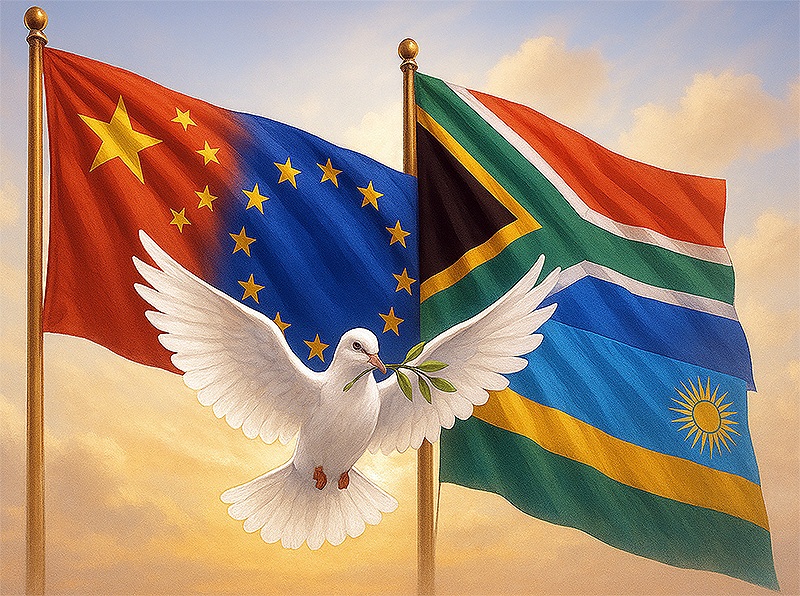
世界各地的和平实践,都体现了一个共同的规律:和平并不是自然而然的结果,而是每一代人共同的努力。它需要在家庭中以理解取代争吵,在社区中以合作取代对立,在国家间以对话取代武力。和平不是空洞的理想,而是实实在在的行动,是一颗颗小小的种子,在人们心田里生根发芽。
真正的和平,从个人内心开始。一个心中怀有恐惧、偏见和仇恨的人,容易播下冲突的种子;一个心怀理解、慈悲和包容的人,却能够把和谐的光亮传递给家庭、朋友、社会,乃至更远的地方。正如道家所言:“静生定,定生明。”唯有安顿内心,才能拨开迷雾,看见人与人、国与国之间的共同利益与共同希望。
These examples demonstrate that peace is never automatic; it is the outcome of human effort across generations. It grows in families where understanding replaces quarrels, in communities where cooperation replaces division, and between nations where dialogue replaces force. Peace is more than an abstract dream — it is concrete action—seeds planted in the hearts of people, destined to grow.
True peace begins in the heart. A heart filled with fear, prejudice, and hatred sows conflict; a heart filled with understanding, compassion, and tolerance radiates harmony outward, from the family to the community, to the nation, and to the world. As wisdom of the Tao teaches: stillness brings steadiness, and steadiness brings clarity. Only by settling the heart can we see through turmoil to the enduring order beneath.

和平,是一种价值观,更是一种责任。周恩来总理在外交实践、社会治理乃至个人品格中,始终把和平作为最高的智慧。他在冷战的风浪中,以平等与尊重化解对抗;在国内政治的动荡时期,以仁爱与无我守护人民。他留给我们的,不是物质财富,而是精神遗产——告诉后人:和平是一种信念,是可以传承的文明火种。
然而,在世界的另一端,我们也看到许多积极的努力:北爱尔兰通过和平协议结束了数十年的流血冲突;东亚国家通过文化交流与合作,缓解历史遗留问题的紧张气氛。这些实例表明:即便伤痕累累,人类依旧有能力在痛苦之后选择和平。
Peace is a responsibility. Premier Zhou Enlai embodied this truth throughout his life. In international relations, he guided diplomacy with equality and respect; in times of domestic upheaval, he protected culture and people with compassion and selflessness. His legacy was a spiritual treasure, much deeper than material wealth: reminding humanity that peace is a flame that must be protected and passed on.
The call for peace today is more urgent than ever. Despite rapid advances in science and technology, humanity still faces wars, nuclear risks, and waves of refugees. Yet we also witness hope: the Good Friday Agreement ended decades of conflict in Northern Ireland; nations in East Asia use cultural exchanges to ease historical tensions. These efforts show that even after deep wounds, humanity can choose peace.
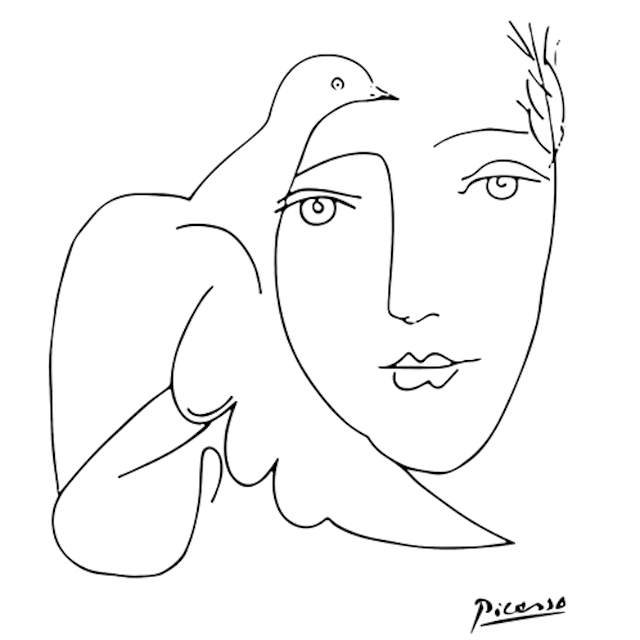
因此,在 2025 年的国际和平日,我们尤其要思考:和平不仅仅依赖政治家或国际机构,它需要每一个普通人共同参与。一个微笑、一句善意的话、一份真诚的理解,都是构建和平的砖石。我们呼吁青年一代,更要在行动中理解和平的深意。和平不是懦弱,而是勇气;不是退让,而是责任;不是幻想,而是选择。
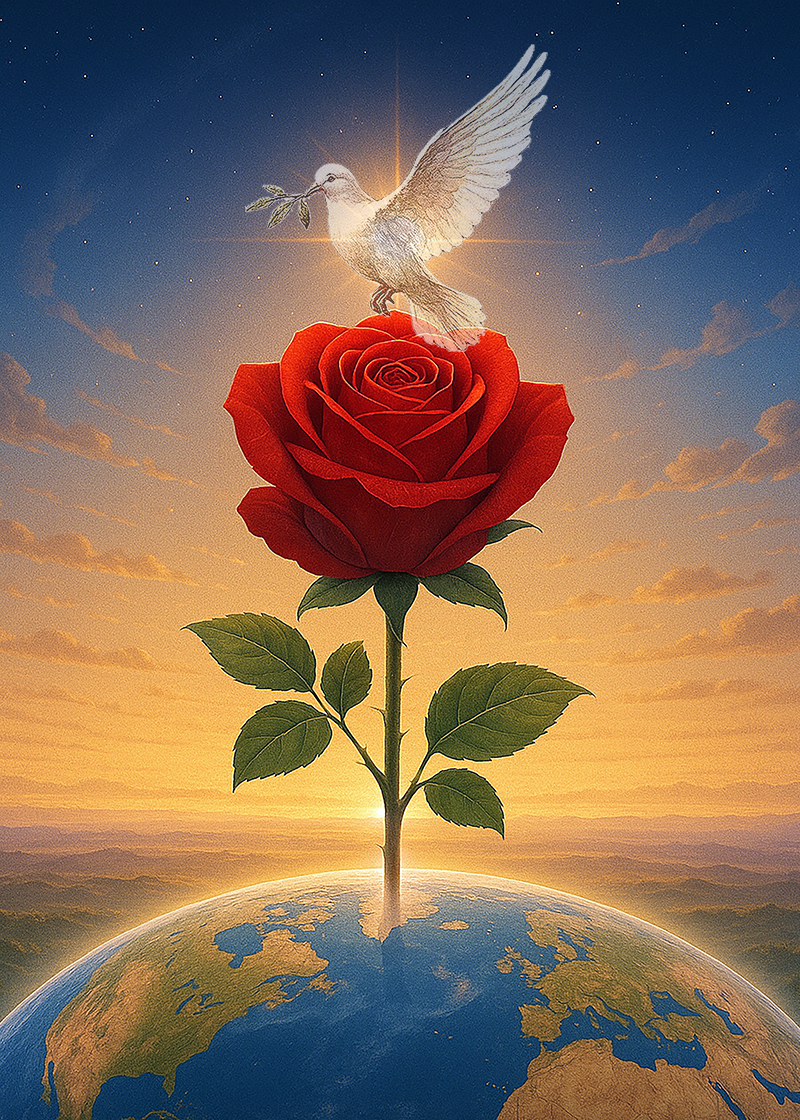
让我们记住:和平是人类唯一可以共同守护的未来。当我们尊重差异,拒绝仇恨,促进交流,支持正义,和平就不仅是一句口号,而是生动的现实。让我们从自己做起,让和平的种子在心中生根,在社会中生长,在世界上开花。愿这份光芒,照耀地球的每一个角落,成为文明永续的灯塔。
On this International Day of Peace, let us remember: peace is not the task of leaders alone, but the shared duty of each one of us. A smile, a kind word, a gesture of understanding—these are the bricks of peace. Especially the younger generation must realize: peace is not weakness but courage; not concession but responsibility; not fantasy but choice.
Peace is humanity’s only shared future. When we respect differences, reject hatred, encourage dialogue and uphold justice, peace ceases to be a slogan and becomes reality.
Let us begin within ourselves; let peace take root in our hearts, grow in society, and blossom in the world. May the light of peace shine upon every corner of the earth, as the eternal beacon of civilization.