A Brief Encounter, A Lasting Memory:
My Meeting with Henry Kissinger
Zhou Xiaofang
June 28, 2025 13:17
本文的中文原文如下
It sometimes seems that our meetings with key people are predestined. My brief encounter with Dr. Henry Kissinger was certainly no accident.
It was the summer of 2011, in the sweltering heat of Beijing, and we were in the midst of preparations for the founding of the Zhou Enlai Peace Institute. This was a solemn undertaking—both a tribute to the spirit of a great statesman, and an expression of our deep desire to pursue peace through action.
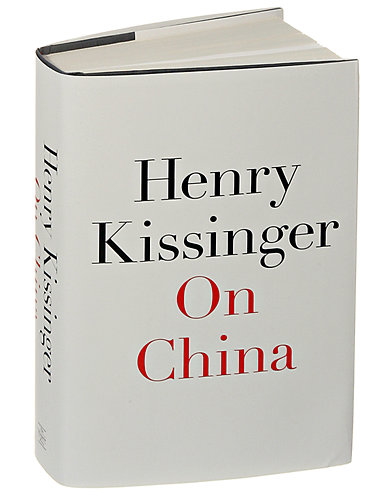
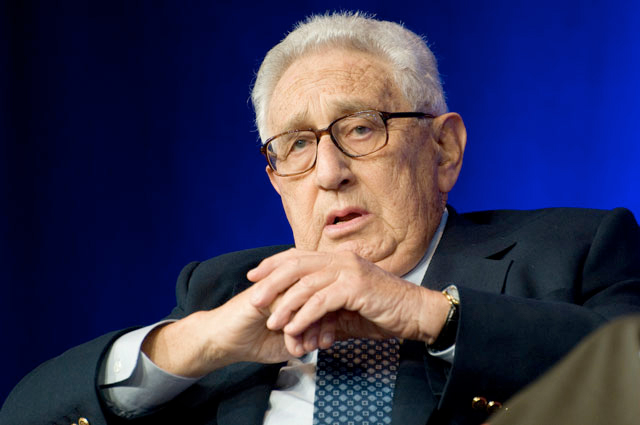
At that moment, 88-year-old former U.S. Secretary of State and strategic thinker Dr. Henry Kissinger, arrived in Beijing to promote his new book, On China. As a key historic figure in the normalization of U.S.-China relations, his visit drew significant attention from all sectors of society. After receiving confirmation from Dr. Kissinger’s assistant, we went to a spacious meeting room at the St. Regis Hotel on Changan Avenue, to meet this legendary figure of 20th-century diplomacy face-to-face.
He wore a dark blue suit, a blue tie flecked with silver, leaning slightly on a black cane. His pace was measured, but his spirit was lively.
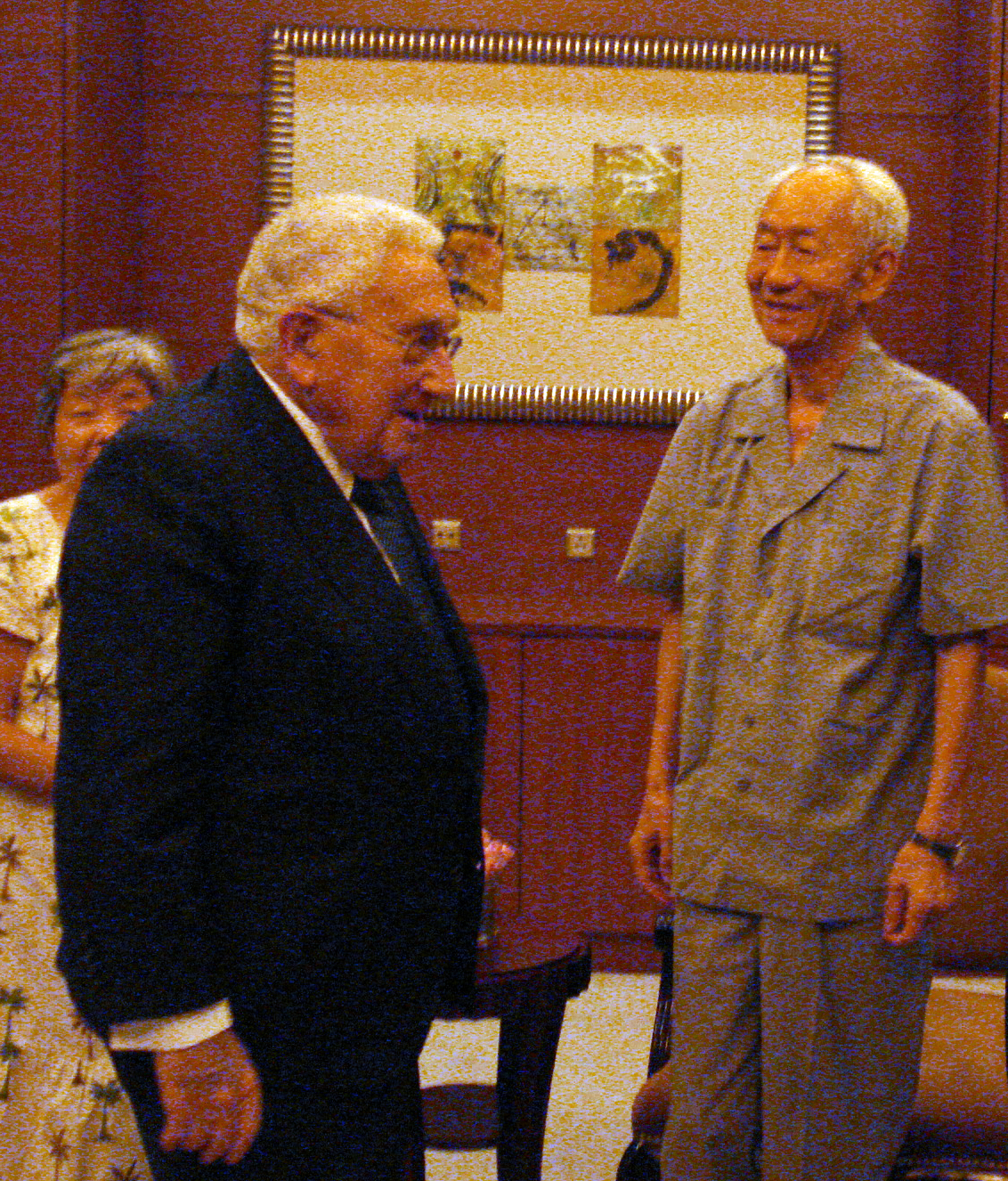
Upon entering the room, he walked straight over to my father, the nephew of Zhou Enlai. The two elderly men grasped each other’s hands firmly—one radiating calm dignity, the other full of warm vitality. As they gazed into each other’s eyes, time seemed to pause; history gently surfaced in the silence.
“I miss my old friend,” Dr. Kissinger said.
His voice was deep and powerful, his posture upright, his smile radiant. In that moment, he was more than statesman or strategist; he was an old friend reuniting with someone he had long held dear.
Upon hearing that my father was approaching 82, he chuckled and said, “Then you’re still quite young!” My father responded with a smile, “Dr. Kissinger, your energy is truly admirable.”
After brief greetings, we all sat down—Michael to his right, and I to his left. Dr. Kissinger asked intently about the purpose of our visit. We spoke of the Zhou Enlai Peace Institute we were establishing.
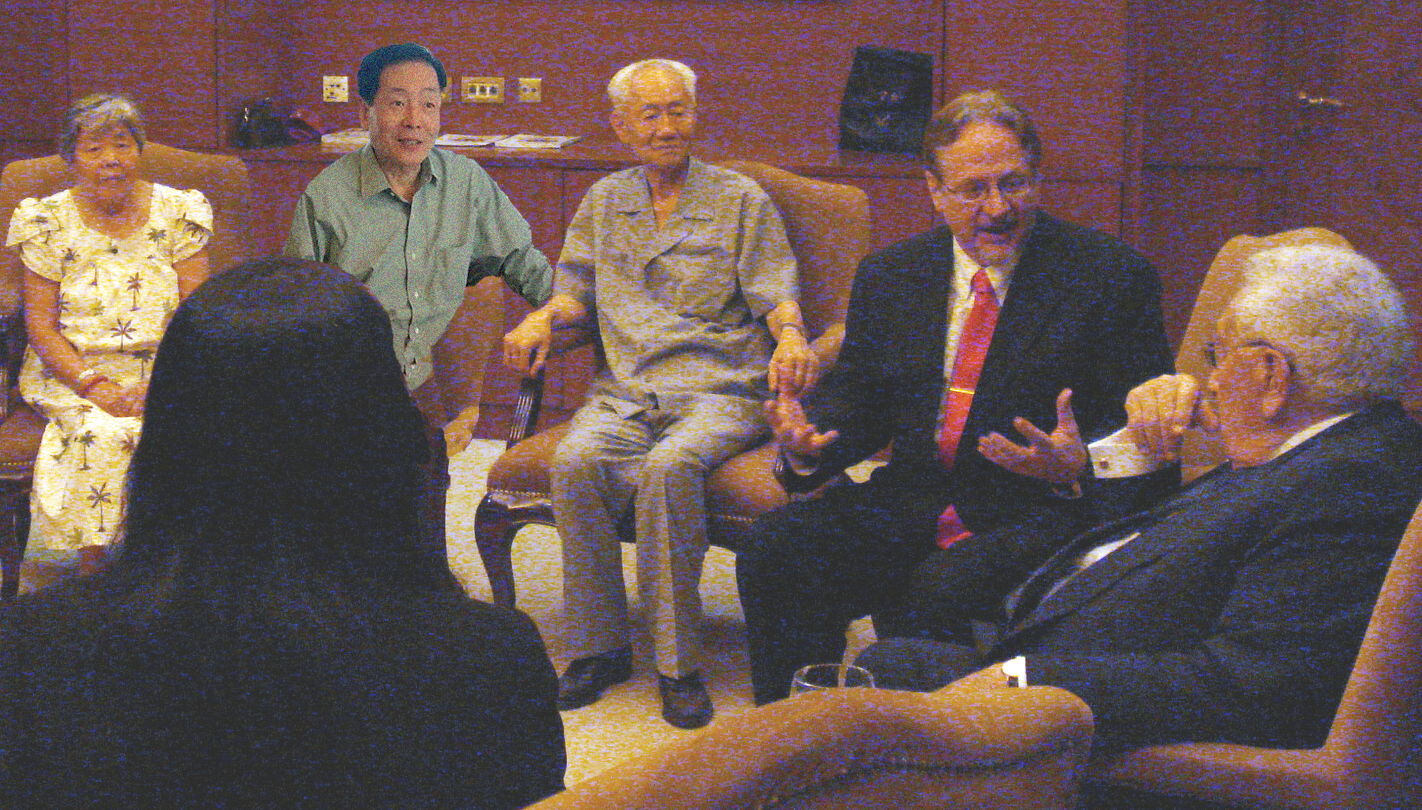
When he heard the name “Zhou Enlai,” his expression shifted. With great seriousness and a tone of deep respect, he said:
“It is time the world truly understood Zhou Enlai.”
Those words were a declaration from a witness to history—a heartfelt call from a man who understood the value of peace.
This foreshadowed something Michael said years later, at a 2017 press conference in Beijing: “Today, the news tells us that the Chinese economy has surpassed that of Japan, to become the world’s second-largest economy. But what the world truly needs is to understand China.”
Dr. Kissinger responded without hesitation: “If you come to New York, let me know. I can introduce you to some friends.” Few words, but of great weight. His support gave us renewed confidence and encouragement at the start of our journey for peace.
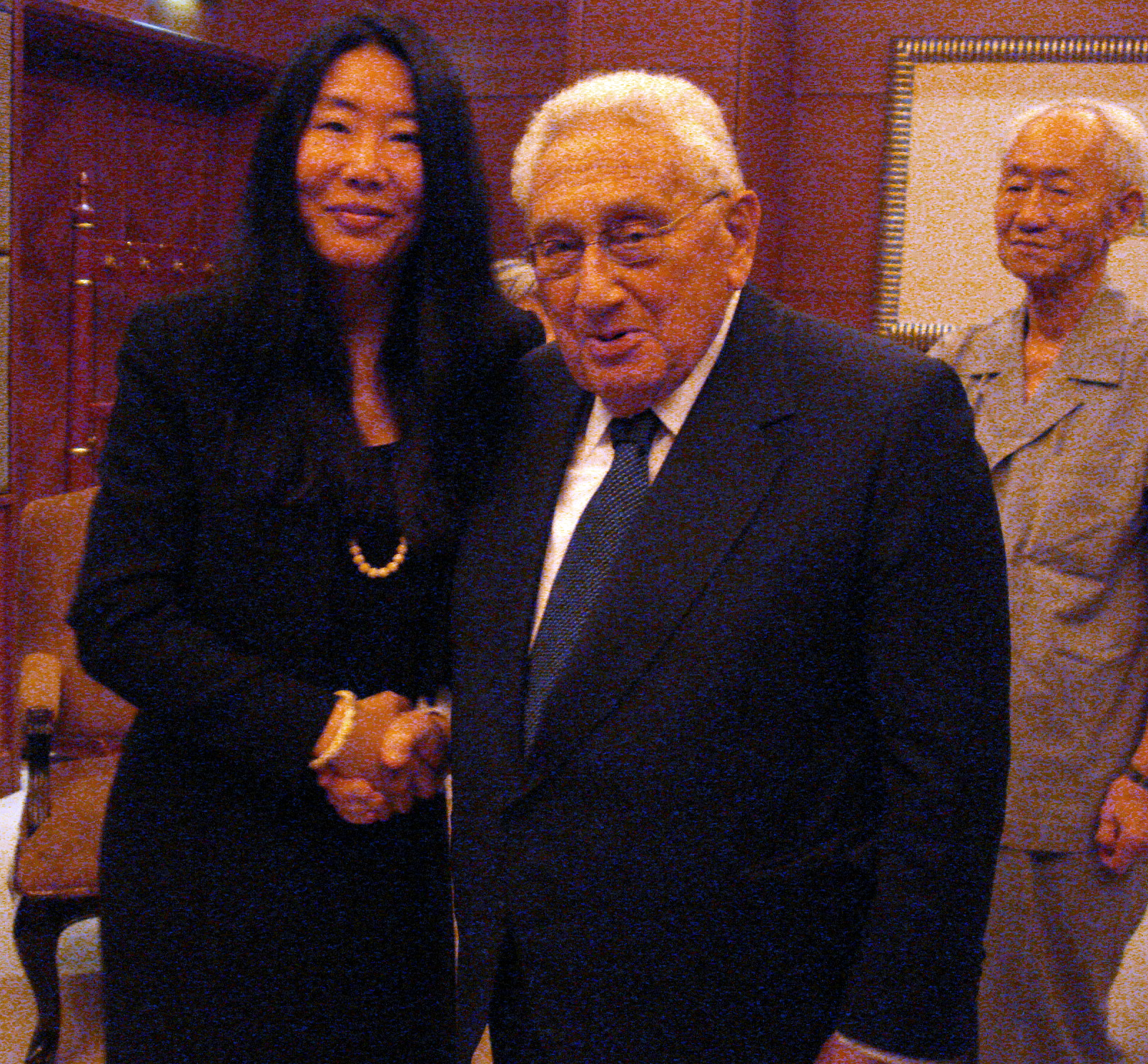
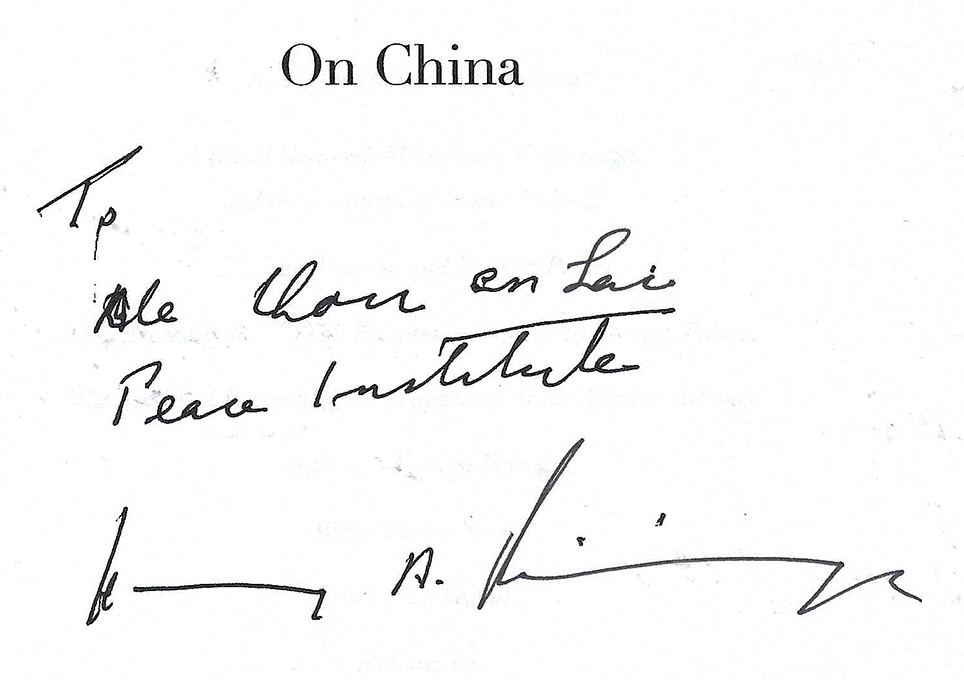
As we parted, he solemnly handed us a copy of “On China” with a personal inscription on the title page:
“To the Zhou Enlai Peace Institute — Henry A. Kissinger.”
This book became a symbol of historical legacy—an enduring gesture that transcended time and space.
We did not know then that this farewell would be our last personal encounter. A few years later, we visited New York hoping to see him again. His assistant received us warmly but explained that Dr. Kissinger, due to advanced age, was no longer receiving many guests.
He was still working diligently on a book about China’s leadership. Unfortunately, that final book would remain unfinished.
In 2023, Dr. Kissinger passed away at the age of 100, leaving behind countless memories—and many thoughts yet to be written. President Xi sent personal greetings, and the sentiments of the Chinese people, to Dr. Kissinger’s widow and to his longtime colleagues at the U.S. State Department.
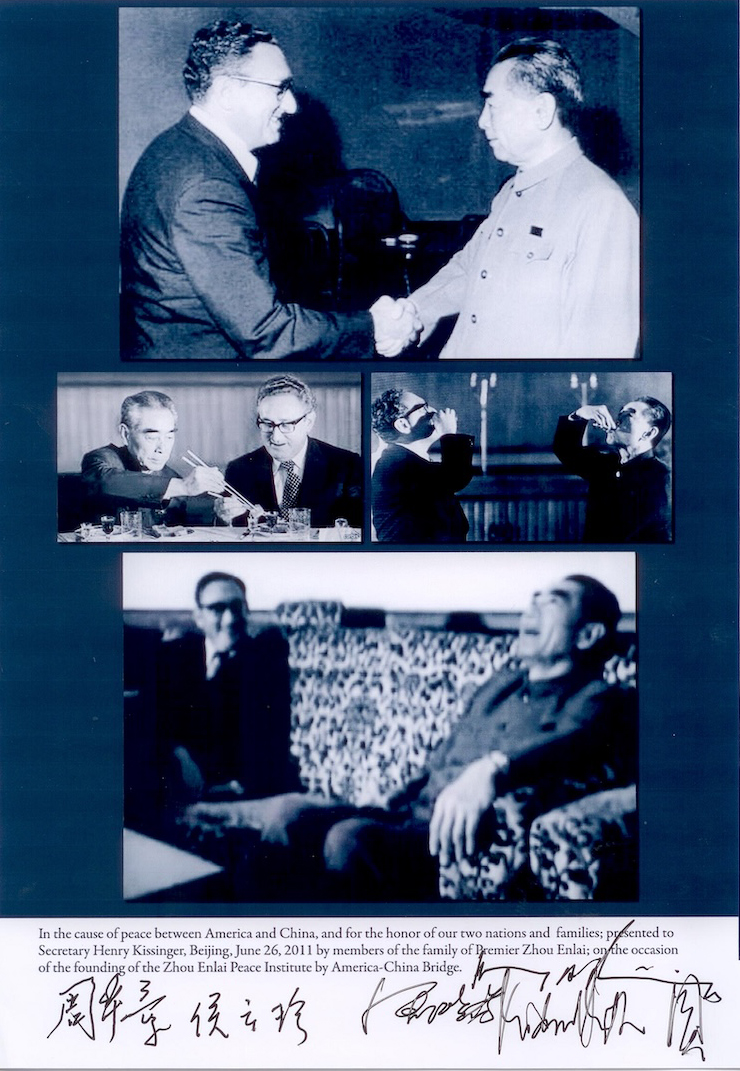
Looking back through history, Kissinger and Zhou Enlai stood on opposite ends of a divided world, yet shook hands at a pivotal moment in the Cold War, reshaping the global balance of power.
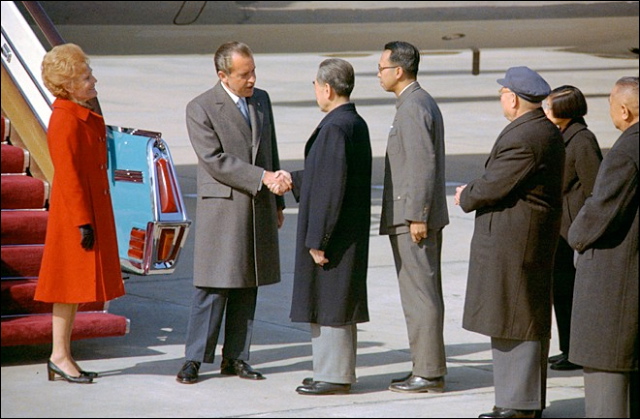
On July 9, 1971, under the pretext of illness, Kissinger left Pakistan and made a secret visit to Beijing. There, he held a landmark meeting with Premier Zhou Enlai. This encounter laid the groundwork for President Nixon’s historic visit to China the following year and marked the beginning of a new chapter in U.S.-China relations.
In fact, even before this diplomatic breakthrough, there had been subtle signals of warming relations. That same April, Chinese and American table tennis players met unexpectedly in Nagoya, Japan, sparking what would become known as “Ping Pong Diplomacy.” This small act of sporting exchange broke the silence and prepared public opinion for Kissinger’s secret visit.
The meeting between Zhou Enlai and Henry Kissinger opened a new path in diplomacy and planted seeds of peace that would grow globally.
In his later reflections and writings, Dr. Kissinger always held Zhou Enlai in the highest regard. He once wrote:
“Zhou Enlai was a truly formidable figure. He had a profound sense of history, sound judgment in real-world affairs, and above all, he was sincere.”
That sincerity was not merely diplomatic technique—it was a manifestation of character. Zhou Enlai’s wisdom was evident in his words and demeanor. He infused every diplomatic interaction with the spirit of Chinese culture—modesty without weakness, dignity without arrogance.
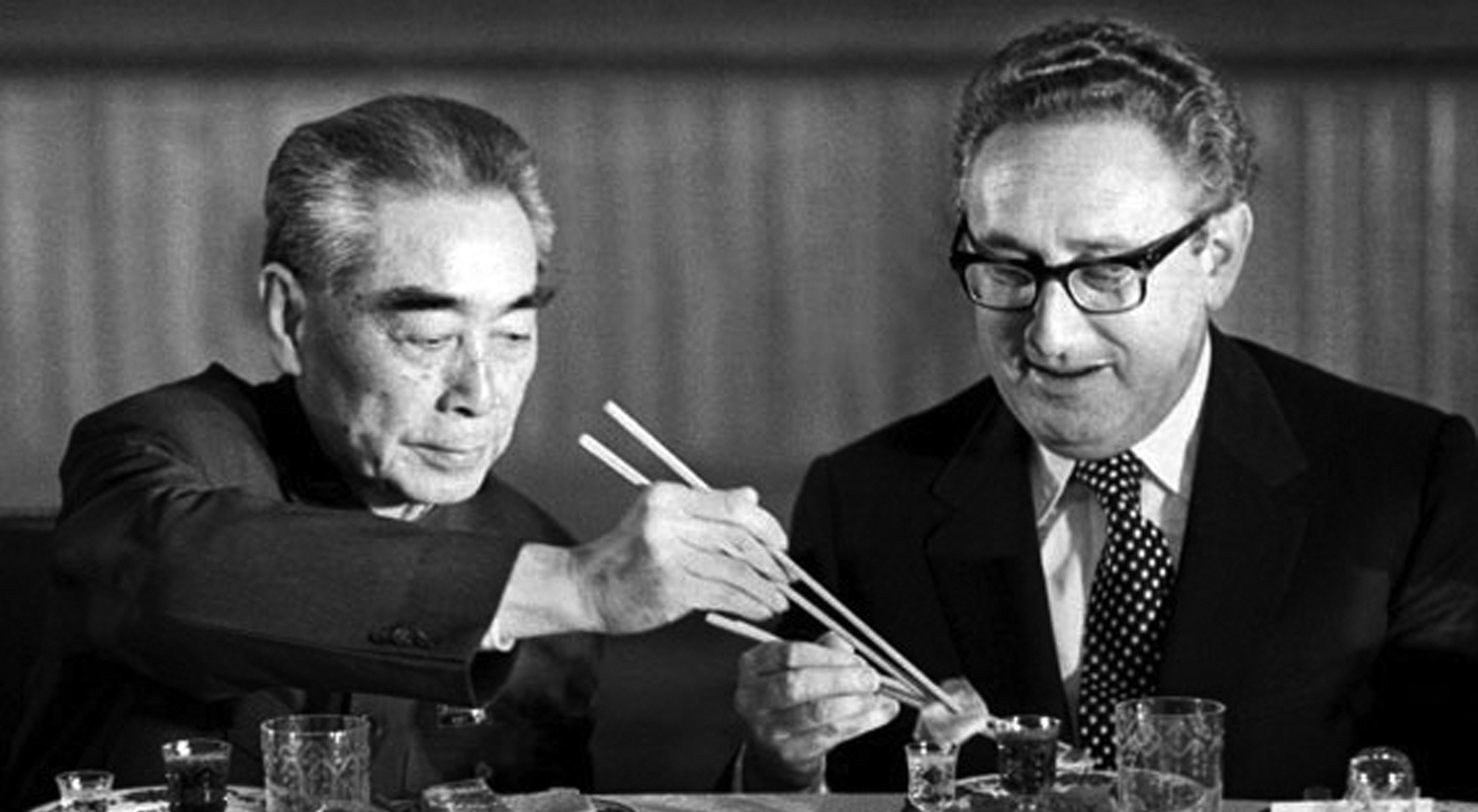
10 Nov 1973, Beijing, China — U.S. Secretary of State Henry Kissinger accepts food from Chinese Premier Zhou Enlai during a state banquet in the Great Hall of the People in Beijing. — Image by Bettmann/CORBIS
Premier Zhou once said, “Diplomacy is the art of relationships between people.” He did not impose by force, but moved others with trust. He did not prioritize gain, but insisted on respect. The trust he and Kissinger built, across deep differences in culture, ideology, and political systems, became a foundation for countless peaceful engagements that followed.
During that 2011 meeting, Michael offered Dr. Kissinger a thought-provoking analogy:
“For Americans to truly understand China, they can begin with Zhou Enlai. For Chinese people to grasp the American spirit, they might look to the story of Martin Luther King.”
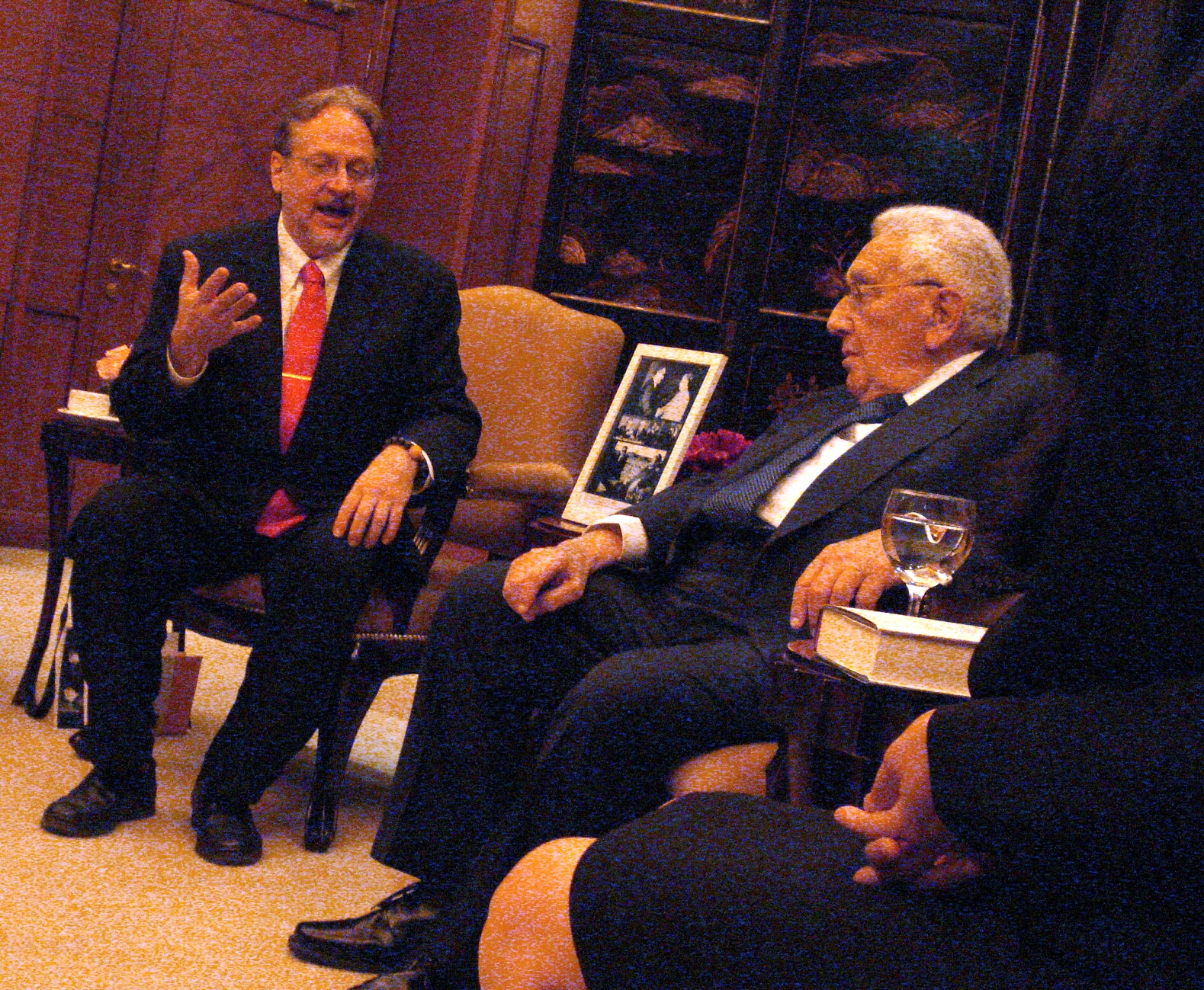
Kissinger nodded repeatedly, his eyes shining with recognition.
After a moment of reflection, Dr. Kissinger said with deep sincerity, “You are doing something truly great. I sincerely wish your Institute great success.”
Then he turned to me, smiling with gentle humor, “I admire this gentleman—and I hope you’ll come visit us in New York.”
There were no cameras, no fanfare, and no headlines. Only a quiet moment of profound respect—a spiritual resonance that has stayed with us ever since. That brief encounter was etched in the soft light of history.
Dr. Kissinger lived through a full century – 100 years. A few weeks before he passed away, he met again in the room where he had met originally with Zhou Enlai — with the President of China, Xi Jinping. To reaffirm the uderstandings of 50 years before.
We captured their words, and some key photographs, on the Peace Institute website: http://www.zhouenlaipeaceinstitute.org/stories/meeting-president-xi-secretary-kissinger/
Dr. Kissinger witnessed war and peace, rivalry and cooperation. He walked through corridors of power, shaping destinies. And yet, in the twilight of his life, he still remembered his old friend—Zhou Enlai.
That short meeting in Beijing, though it lasted only minutes, carried the resonance of two great civilizations. It was not merely a memory—it was a reaffirmation of peace, a rekindling of faith in dignity and dialogue.
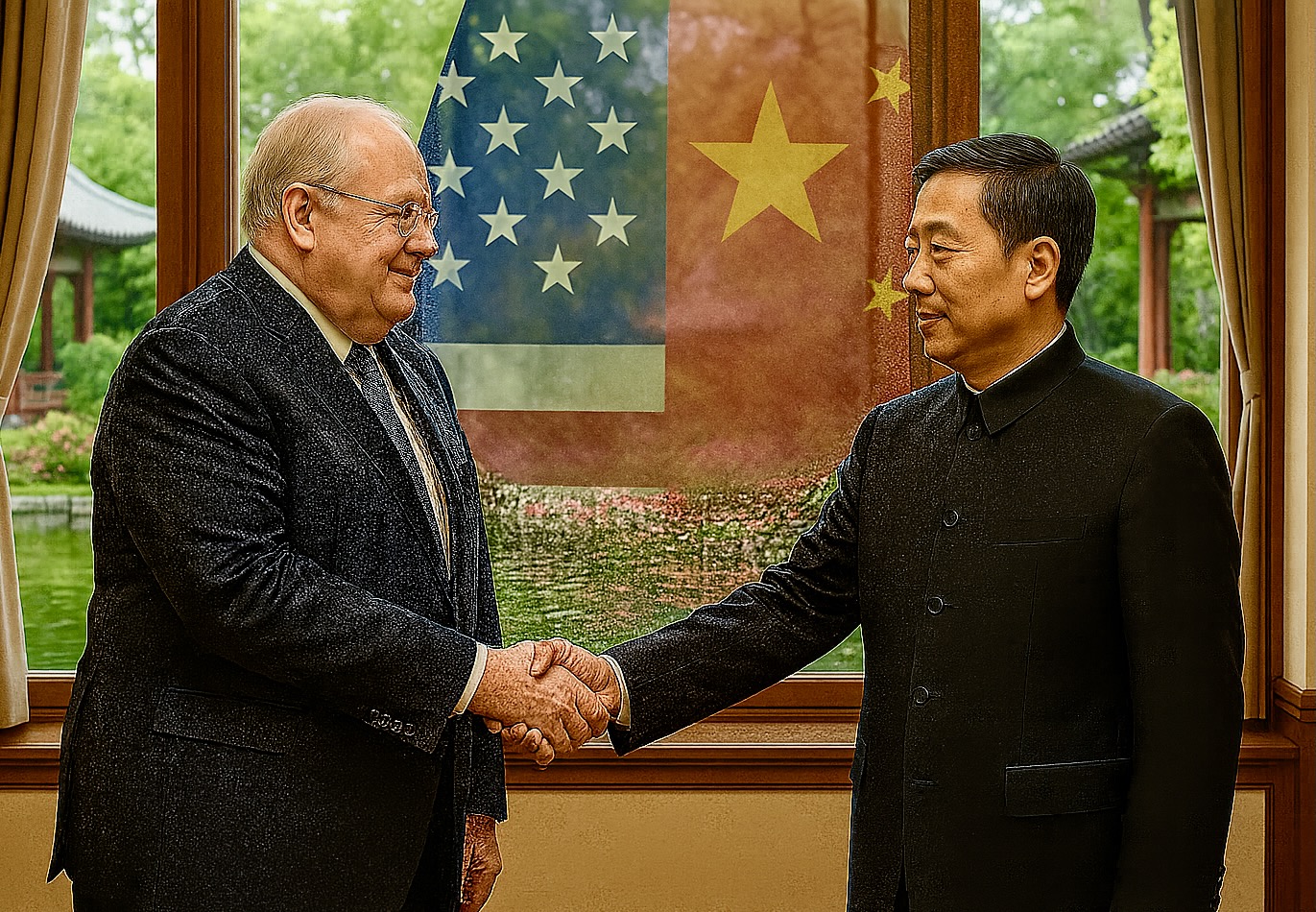
An artist’s impression of the first meeting between Henry Kissinger and Zhou Enlai, at Diaoyoutai in Beijing.
We remember the past in order to honor those who were there. More important — amid complexity and conflict, there are still those who hold fast to simple, enduring values. Kissinger called it sincerity. We call it trust.
Let this memory endure, as a bridge between nations—and a light for those still walking the path of peace.
…English version edited by Michael North
一次短暂会面,一份深远纪念
我与基辛格的相遇
周晓芳
2025年06月28日 13:17
如果说,人生中所遇之人,皆是冥冥之中的安排,那么,那一场与亨利·基辛格博士的短暂会面,也绝非偶然。
那是2011年夏天,北京盛暑之中,我们正在紧锣密鼓地筹备“周恩来和平研究院”的创立。这是一项庄严的事业,是对一位伟人精神的致敬,也是对和平的渴望与实践。
正是在那个时刻,时年88岁的美国前国务卿、外交战略家基辛格博士到访北京,推广他的新书《论中国》。作为中美关系破冰历史的亲历者,他的到来引发了社会各界的高度关注。在接到基辛格博士助理的确认后,我们来到北京瑞吉酒店的一间宽敞会客室,与这位世纪外交传奇人物面对面交流。
他身穿深蓝色西装,配蓝色银点领带,手拄黑色拐杖,步履略显迟缓却精神饱满。一进门,他径直走向我的父亲,两双手紧紧地握住:一位是充满祥和的老人,一位是满面春风的长者。他们凝视彼此的目光,那一刻仿佛凝固,历史在其中悄然出现。
“我很想念我的老朋友。”基辛格说道。
他的声音浑厚有力,身体挺拔,笑容可掬。此刻的他,不是战略谋士,不是世界政坛上的风云人物,而像是与一位多年未见的挚友重逢。当基辛格听到父亲快82岁了,风趣地说:“那你还年轻得多。” 父亲也被他的幽默所感染,微笑着回应:“博士的精力十足,令人佩服。”
听到“周恩来”这个名字,他神情微微一变,严肃而庄重地说:
“是时候让世界真正了解周恩来了。”
这句话,是一个世纪见证者的箴言,是一位深知和平价值的外交家发出的真诚召唤。
这句话,也顿时让我联想到2017年我们在北京新闻发布会上,迈克尔的发言。他说:“今天,世界新闻报道中国已超过日本,成为全球第二经济大国。世界更需要了解中国。”
基辛格随即表示:“如果你们来纽约,请告诉我。我可以给你们介绍一些朋友。”话语不多,却分量沉重。这份支持,为我们即将起步的和平事业,带来了莫大的信心与鼓舞。
分别时,他将一本《论中国》郑重交给我们,并在扉页亲笔题词:“致:周恩来和平研究院——亨利·A·基辛格。”这本书,象征着一份历史的回赠,一种跨越时空的力量。
中文翻译:致:周恩来和平研究院 亨利 A 基辛格
回溯历史,基辛格与周恩来曾在世界的两端,握手于冷战拐点,改变了东西方对峙的局面。1971年7月9日,基辛格以“感冒”为由离开巴基斯坦,首次秘密访华,并在北京与周恩来展开历史性会谈。这次会晤,为次年尼克松总统的访华铺平了道路,亦为中美关系开启了新纪元。
事实上,这场转折之前,已经悄然酝酿着民间破冰的温度。同年4月,中国乒乓球队与美国球员在日本名古屋相遇,催生了“乒乓外交”,成为和平的先声。这一民间互动打破了沉寂,为基辛格的秘密来访提供了舆论基础。
周恩来总理与基辛格博士的会晤,打开了外交新格局的大门,也为全球和平留下了深远的遗产。
在基辛格后来的回忆与著作中,对周总理始终给予极高评价。他曾写道:“周恩来是一个真正令人敬畏的人。他有深刻的历史感,也有现实的判断力,最重要的是,他是真诚的。”
这种“真诚”,不仅是外交策略的体现,更是人格魅力的自然流露。总理的智慧体现在他的言辞举止之间,将中华文化中“中庸之道、不卑不亢”的精神融入外交处世的每一个细节。
周恩来曾说:“外交,是人与人之间的艺术。”他不是以强权压人,而是以信义感人;不是以利益为先,而是以尊重为本。他与基辛格之间建立起的理解与信任,跨越了文化、制度、意识形态的深沟险壑,为后来无数和平互动奠定了道义基础。
在那次与基辛格博士的会谈中,迈克尔向他提出一个发人深省的比喻:
“美国人民若想真正了解中华民族,可以从了解周恩来总理的丰功伟绩开始;中国人民若想理解美国精神,也可以从了解马丁·路德·金的英雄故事开始。”
这句话赢得基辛格频频点头,他眼中闪动着理解与认同的光。
基辛格听后沉吟片刻,深情地说:“你们做了一件非常伟大的事业,我由衷祝福你们圆满成功。”说完,他转过头幽默地笑着说:“我很欣赏这位先生,也欢迎你们来纽约做客。”
1973年11月10日,中国北京——美国国务卿亨利·基辛格在北京人民大会堂举行的国宴上接受中国总理周恩来递送的食品。 — 图片由贝特曼/科比斯提供
回望此生,基辛格博士走过百年,历经战火与冷战,阅尽权谋与政略。而在生命的后段,他始终未忘记那位老朋友——周恩来。
那一次短暂的北京会面,虽只短短数十分钟,却凝聚了两个伟大民族的历史回声。它不仅是我们一生难忘的片刻,更是对和平理念的再确认,对人格信仰的再次唤醒。